
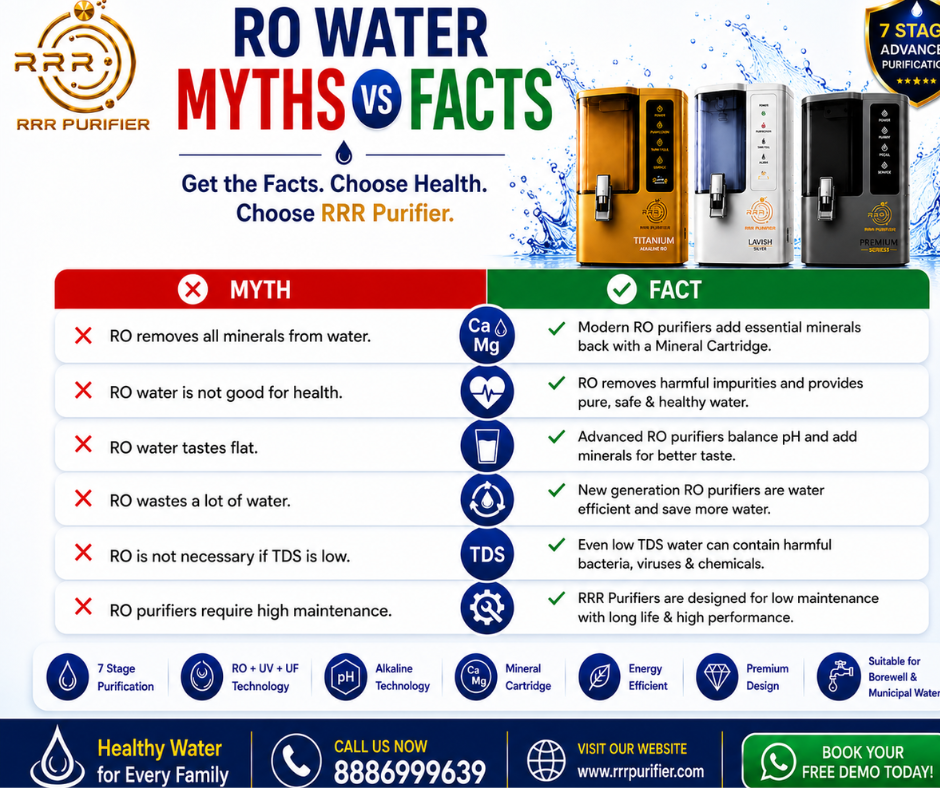
Maintain the RO purifier at home to ensure your family gets safe, clean, and healthy drinking water every single day. Your RO purifier works like a silent guardian, filtering out harmful contaminants, heavy metals, and excess TDS from your water. But just like a car needs servicing and a phone needs charging, your purifier needs regular care too. Many homeowners spend thousands on buying a purifier but forget that maintenance is what keeps it effective. Over time, filters get clogged, membranes lose efficiency, and bacteria can build up inside the storage tank. If ignored, your purifier may still run—but the water quality may drop without you even realising it. That’s why learning how to maintain an RO purifier at home is one of the smartest habits you can build.
Why You Should Maintain RO Purifier at Home Regularly
Maintain the RO purifier at home because regular maintenance directly affects the quality of your drinking water. Think of your purifier like a shield. At first, it’s strong and reliable. But over time, if you don’t clean or replace its parts, cracks start to form. Those cracks can let impurities slip through.
RO purifiers remove contaminants like lead, arsenic, bacteria, chlorine, and dissolved solids. But these contaminants collect inside filters and membranes. If not cleaned or replaced, they can become breeding grounds for bacteria. That’s like cleaning your floor with a dirty mop—it defeats the purpose.
Regular maintenance helps improve:
- Water taste
- Purifier lifespan
- Filter performance
- TDS control
- Water flow speed
Skipping maintenance can increase repair costs and shorten your purifier’s life.
Maintain RO Purifier at Home by Understanding Its Parts
Before you maintain anything, you should know what’s inside.
An RO purifier has several important components, and each one has its own job.
RO Membrane
Maintain the RO purifier at home by taking care of the RO membrane because it’s the heart of the system. This membrane removes dissolved salts, heavy metals, and microscopic contaminants.
Over time, it gets clogged.
When that happens:
- Water flow slows down
- TDS increases
- Taste changes
A damaged membrane is like a blocked road—water can’t pass smoothly.
Sediment Filter
This filter catches dirt, rust, and sand.
It acts as the first security guard.
If this filter gets blocked, everything behind it works harder.
That increases wear on the membrane.
Carbon Filter
The carbon filter removes chlorine, odour, and bad taste.
Think of it as the taste manager.
Without it, water may smell strange or taste unpleasant.
Maintain RO Purifier at Home: 7 Essential Maintenance Tips
Here are the most important ways to keep your purifier in top shape.
1. Maintain the RO purifier at home by cleaning the storage tank.
Maintain the RO purifier at home by cleaning the storage tank at least once every 2–3 months. Water stays in the tank for hours, sometimes days. That creates a chance for bacterial growth. Sanitiser. Empty the tank.
Rinse thoroughly.
A dirty tank is like storing clean clothes in a dusty cupboard.
2. Maintain RO Purifier at Home by Replacing Filters on Time
Filters are not permanent.
They wear out.
Here’s a general replacement guide:
| Filter Type | Replacement Time |
|---|---|
| Sediment Filter | 6–8 months |
| Carbon Filter | 6–12 months |
| RO Membrane | 12–24 months |
Delaying replacement affects water quality.
It also puts pressure on the whole system.
3. Maintain RO Purifier at Home by Checking Water Pressure
RO systems need proper water pressure.
Low pressure means poor purification.
High pressure can damage filters.
Check if:
- Water flow is too slow
- Pump makes unusual sounds
- Tank fills too slowly
Think of water pressure like blood pressure for your purifier.
Balance matters.
4. Maintain RO Purifier at Home by Monitoring TDS Levels
TDS tells you if your purifier is doing its job.
Buy a TDS meter.
It’s affordable.
Test your output water regularly.
If TDS suddenly rises, it often means the following:
- RO membrane needs replacement
- Filters are clogged
- System needs serThis is one of the easiest maintenance checks.
kills internal bacteria.
This is different from filter replacement.
Use food-safe sanitising solutions.
Sanitise:
- Storage tank
- Pipes
- Faucets
- Connectors
Do this every few months.
Clean systems produce healthier water.
6. Maintain RO Purifier at Home by Inspecting Leakage Issues
Leaks are common.
But they should never be ignored.
Even small leaks can damage internal parts.
Check:
- Pipe joints
- Filter housing
- Water inlet valve
- Drain pipe
A tiny leak today can become a major repair tomorrow.
Like a cracked roof in a monsoon—it gets worse fast.
7. Maintain RO Purifier at Home with Professional Servicing
DIY is useful.
But professionals spot hidden problems.
Schedule service every 6–12 months.
A technician can:
- Test pressure
- Check membrane health
- Clean internal parts
- Detect hidden leaks
Think of it as a health checkup for your purifier.
Preventive care saves money.
Common RO Purifier Problems and Solutions
Even with maintenance, issues can happen.
Knowing the signs helps.
Slow Water Flow
Maintain the RO purifier at home if water flow slows because this often means clogged filters or low pressure.
Solution:
- Replace filters
- Check pump
- Clean membrane
Bad Taste in Water
Bad taste usually points to an old carbon filter.
Solution:
- Replace carbon filter
- Clean storage tank
- Check TDS level
A fresh taste means healthy purification.
Water Leakage
Leaks can happen from loose pipes or damaged housings.
Solution:
- Tighten connectors
- Replace broken seals
- Call service if needed
Never ignore leaks.
RO Filter Replacement Schedule
A regular schedule makes maintenance easy.
| Part | When to Replace |
|---|---|
| Sediment Filter | Every 6 months |
| Carbon Filter | Every 6–12 months |
| RO Membrane | Every 1–2 years |
| UV Lamp (if hybrid) | Every 12 months |
Set reminders.
This simple habit prevents bigger problems.
Signs You Need RO Purifier Maintenance
Your purifier usually gives warning signs.
Watch for:
- Slow purification
- Strange taste
- Bad smell
- High TDS reading
- Tank not filling
- Water leakage
- Unusual noise
Ignoring signs is like ignoring a car warning light.
It rarely ends well.
DIY vs Professional RO Service
DIY maintenance saves money.
Professional servicing saves bigger repairs.
Best approach?
Use both.
DIY for:
- Tank cleaning
- TDS testing
- Leak checking
Professional for:
- Membrane replacement
- Pump repair
- Full system sanitization
Balance is the smart strategy.
Conclusion
Maintain the RO purifier at home to protect your family’s health and extend the life of your purifier. Clean filters, healthy membranes, proper TDS, and regular servicing all work together to ensure pure drinking water. Skipping maintenance may not show immediate problems, but over time, water quality drops and repair costs rise.
Your purifier is like a bodyguard for your water.
Take care of it, and it will take care of you.
Clean water isn’t just about purification—it’s about consistency.
And maintenance is the secret behind that consistency.
FAQs
1. How often should I maintain my RO purifier at home?
Basic cleaning should be done every 2–3 months, and professional servicing every 6–12 months.
2. How do I know if my RO membrane needs replacement?
If TDS increases, water flow slows, or taste changes, the membrane may need replacement.
3. Can I clean RO filters myself?
Some basic cleaning is possible, but replacing or deep cleaning filters is best handled by professionals.
4. Why does my RO water taste bad?
This often happens due to old carbon filters, dirty storage tanks, or membrane issues.
5. Is TDS checking necessary for RO maintenance?
Yes, TDS monitoring helps you know if your purifier is working properly.